
The Wildebeest Migration in January
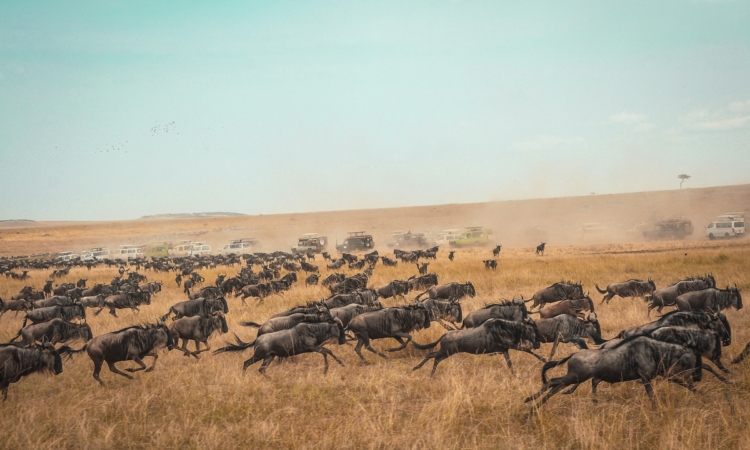
The start of the New Year means new life, and the stage for the spectacle this month – January is around the Ndutu Plains in the Ngorongoro Conservation Area, to the south of the Serengeti National Park.
What to Expect in January
- Weather: A hot and humid summer month with average temperatures ranging from 15°C (59°F) to 28°C (82.4°F).
- Wildebeest Migration Movement: The Wildebeests converge between Lobo and Naabi Hill on the eastern edge of Serengeti National Park in January. The herds are on the move in search of good grasses for their newly born calves.
- Predator Encounters: Because it is calving season, big cats visit in January to feast on the vulnerable calves.
Where is the Wildebeest Migration in January?
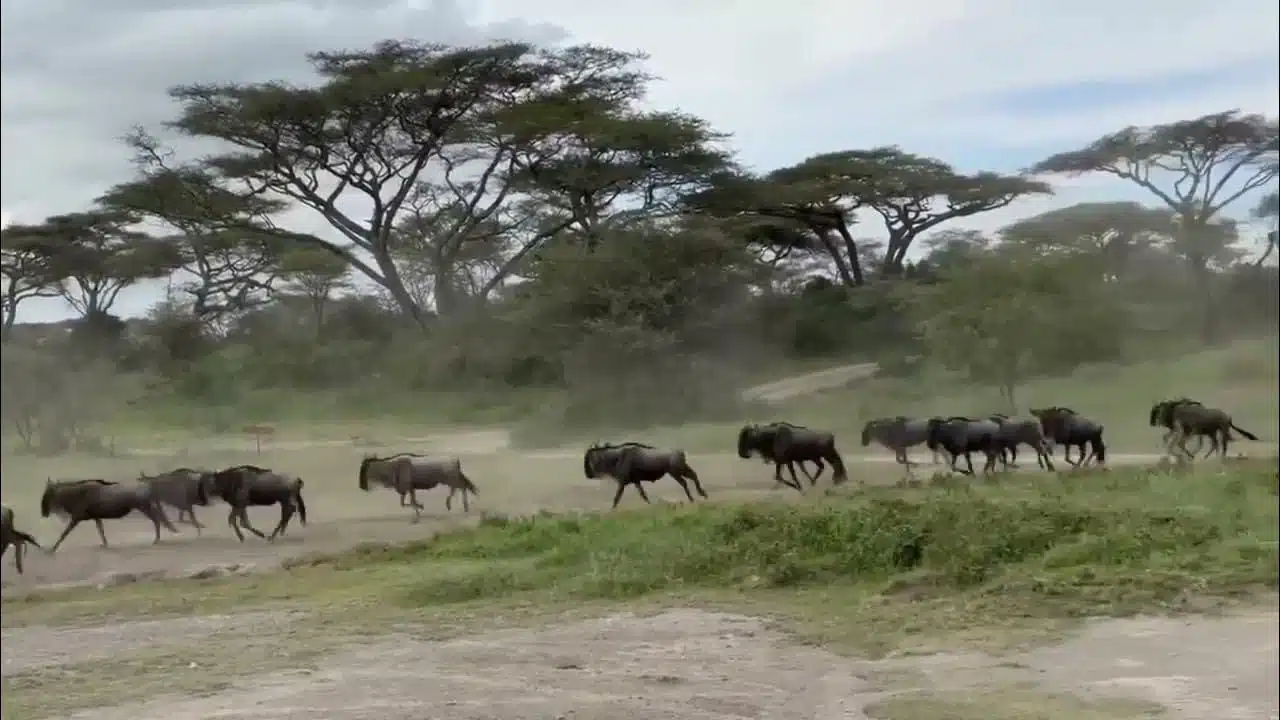
The start of the year falls in the middle of the “Green Season”, right between the “short: and “long rains”. The plains form a beautiful palette of green, the air is clear from dust, and the wildlife is relatively easy to spot. As the grass turns green, it also attracts the wildebeest moving in from the north into the southern Serengeti, Ndutu, Ngorongoro Conservation Area and Salei Plains.
Expect some afternoon showers, but they only last for a short period and usually do not affect your game drives.
Temperatures reach an average high of 28°C (82°F) and a low of 15°C (59°F). January is a warm month, and other wildlife is easier to spot since the vegetation is less lush. Animals tend to gather around rivers and water holes.
Is January a good time to see the Wildebeest Migration?
At this time of year, the female wildebeests are in their final month of pregnancy. As soon as the rain starts to fall, the top priority of wildebeests is to seek new-growth grasses as sustenance for their newborn youngsters.
Tourists abound over the Christmas and New Year Holiday, especially in the Ngorongoro Area. But with good planning, the luxury lodges and crowds around the crater’s rim can easily be avoided.
The Subtle Beauty of the Green Season
The green season also means the rainy season, which stretches from late October to May and it is easy to see where the imagery comes from – the thirsty plains soak up the water and spring to life. Perched chalky brown land becomes a luscious green, and the migratory animals are drawn to the fresh grass.
The rainy season in Tanzania is actually divided into two. From October to December the “short rains” fall, and the months March to May bring the “long rains”.
Where does the moisture come from? – During the green season, the dominant winds are blowing from the warm ocean to land and bringing with them evaporated water from the Indian Ocean. As the air cool over the land, the water condenses as rain.
During this time of the year, it rarely rains all day. You are still likely to see plenty of sun and wildlife. Lots of baby animals are born at this time – hundreds of thousands of them on the Serengeti plains alone. As with any off-season, the crowds are fewer, adding to the benefits of a safari at this time.
